

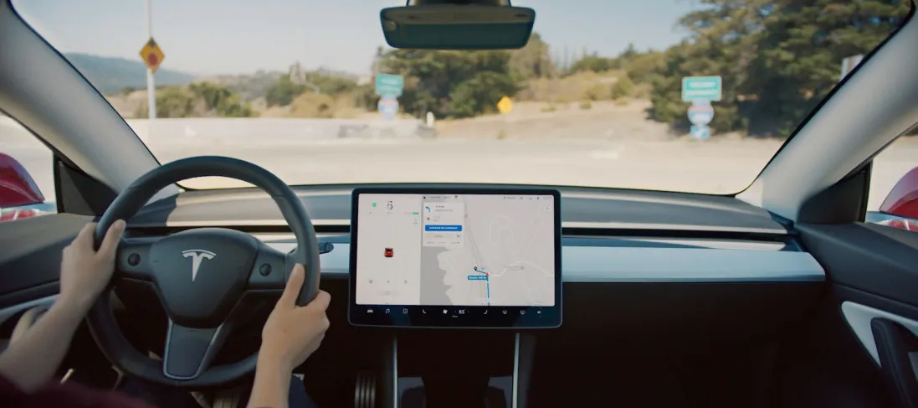
Tesla Phases Out Autopilot to Accelerate Full Self-Driving Adoption
Tesla has officially discontinued its Autopilot system, the company’s basic driver-assistance feature, as it shifts focus toward promoting its more advanced Full Self-Driving (FSD) software. The move comes amid ongoing regulatory scrutiny and changing customer access to the company’s autonomous driving technology.
Regulatory Pressure in California
The decision follows a ruling that Tesla engaged in deceptive marketing, overstating the capabilities of both Autopilot and FSD over several years. In December, a judge ordered a 30-day suspension of Tesla’s manufacturing and dealer licenses in California, the company’s largest U.S. market. The California Department of Motor Vehicles (DMV), which originally brought the case, temporarily stayed the ruling for 60 days to allow Tesla to comply by removing the Autopilot branding.
What Autopilot Offered
Autopilot combined Traffic-Aware Cruise Control, which maintains a set speed while keeping a safe distance from vehicles ahead, with Autosteer, a lane-centering feature capable of navigating curves. Tesla’s current online configuration now shows that new vehicles come standard only with Traffic-Aware Cruise Control, though it remains unclear if existing owners will be affected.
Transition to Full Self-Driving
The shift coincides with Tesla’s announcement that starting February 14, it would discontinue the $8,000 one-time purchase option for FSD. Customers will instead subscribe to the software at $99 per month, with CEO Elon Musk noting that the price will rise as FSD capabilities improve.
Musk has repeatedly emphasized the potential of FSD to enable “unsupervised” driving, suggesting that drivers could “be on your phone or sleeping for the entire ride.” In December, he highlighted that a new FSD version allowed the former, despite texting while driving remaining illegal in nearly all U.S. states.
Robotaxi Rollout in Texas
On Thursday, Tesla deployed its first robotaxi versions of the Model Y SUVs in Austin, Texas. These vehicles operate on a more advanced version of Tesla’s autonomous driving software and run without human safety monitors in the cars. However, they are still supervised by company vehicles.
Adoption and Company Goals
Despite launching the FSD beta in late 2020, customer uptake has been slower than expected. In October 2025, Tesla CFO Vaibhav Taneja revealed that only 12% of Tesla owners had purchased the software. Musk has set a target of “10 million active FSD subscriptions” by 2035, a key milestone tied to his $1 trillion compensation package.
A History of Autopilot
Tesla first introduced Autopilot in the early 2010s after discussions with Google, which was developing autonomous driving technology through what would become Waymo, broke down. The system became standard on all Tesla models in April 2019.
Over its decade-long existence, Tesla has often struggled to communicate the limits of Autopilot. The company’s marketing led some drivers to overestimate the software’s capabilities, contributing to hundreds of crashes and at least 13 fatalities, according to the National Highway Traffic Safety Administration.


0 Comments